

SERVICING:
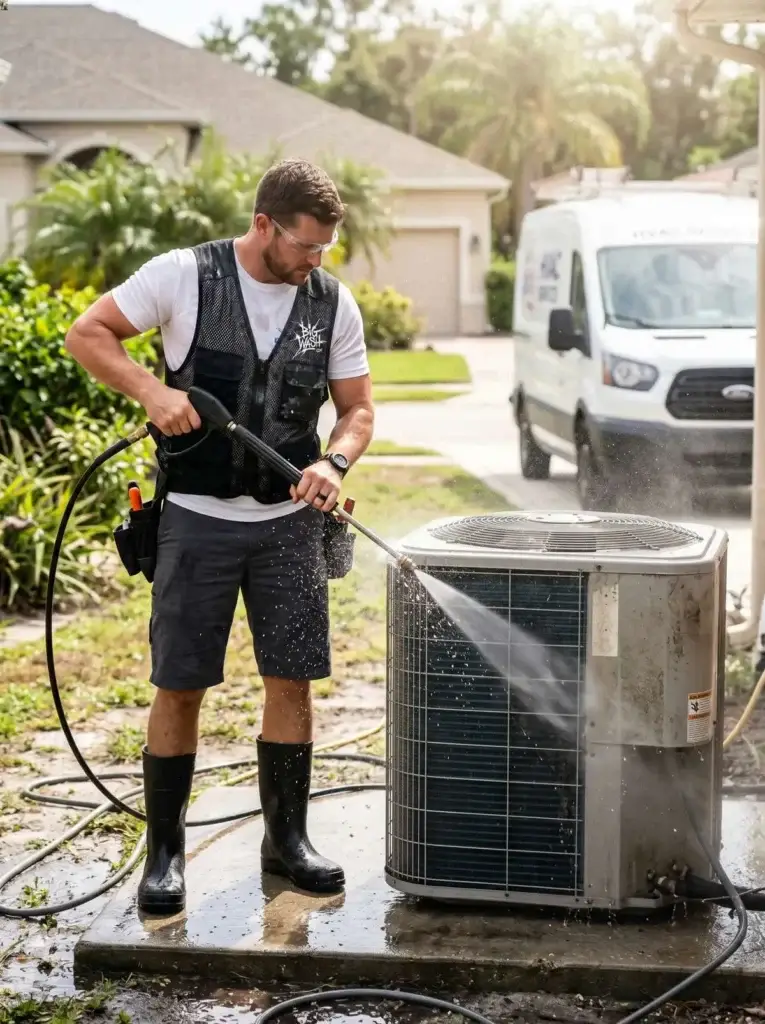
AC Unit Cleaning
THE SCIENCE BEHIND THE DIRT:
Why does your AC seem to work harder every summer even though nothing changed?
Because a hidden layer of dirt builds on the coils, forcing the unit to fight for every degree.
THE DIRTY NUMBERS:
A clogged AC can lose up to 30% efficiency, so nearly a third of your cooling money vanishes into the Florida heat.
YOUR WASH WINDOW:
Plan on a coil and exterior cleaning about every 3 to 4 months in Florida, since the unit runs nearly year-round and pulls in pollen, grass clippings, and dust the entire time. In the hot season (roughly May through September), when the system runs hardest, tighten that to every 2 to 3 months to keep efficiency up. In the cooler months when the AC rests, every 4 to 6 months is plenty.
If you live near the coast, salt in the air corrodes the aluminum fins and copper coils faster, so a gentle rinse every 6 to 8 weeks helps protect the metal and extend the unit’s life.
Materials we typically use include a foaming coil cleaner, a fin-safe biodegradable degreaser, and a salt-neutralizing rinse for coastal units. Our go-to machinery is a low-pressure coil sprayer, a soft-bristle fin brush, and a fin comb to straighten bent fins so air flows freely again.
Brick & Stone Cleaning
THE SCIENCE BEHIND THE DIRT:
Why does brick grow green and black patches that no amount of scrubbing seems to fix?
Because brick is secretly full of tiny holes that drink in Florida's humidity and grow living organisms inside.
THE DIRTY NUMBERS:
Freshly cleaned masonry can start staining again within 12 months without proper treatment.
YOUR WASH WINDOW:
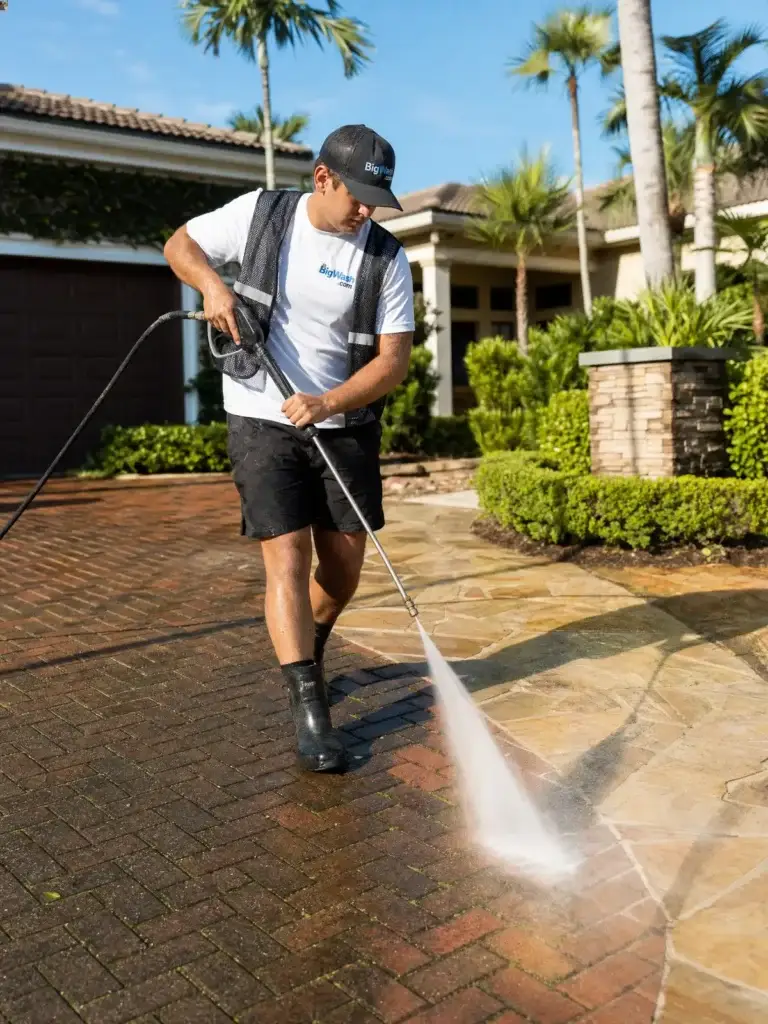
A soft wash every 12 to 18 months keeps brick and stone free of the algae and mildew that take root in the porous surface. In shaded, north-facing, or tree-covered areas that stay damp, every 9 to 12 months is wiser, since those spots green over fastest.
Near the ocean, salt works its way into the pores and speeds up staining and efflorescence (that white chalky residue), so a coastal home benefits from cleaning every 8 to 12 months, sometimes followed by a breathable masonry sealer to slow re-staining.
In the warm, wet season, growth accelerates, so a mid-year touch-up may be worth it. In the cooler, drier months, masonry stays cleaner longer. Materials we use include a sodium-hypochlorite soft-wash blend, a masonry-safe surfactant, and an optional breathable sealer. Machinery includes a soft-wash system with a low-pressure tip and an adjustable downstream injector so we never blast the mortar joints loose.
Deck Cleaning
THE SCIENCE BEHIND THE DIRT:
Why does an old wooden deck turn gray over time?
It's not age. That gray is a living film of mildew and decaying wood fibers you walk on barefoot.
THE DIRTY NUMBERS:
Florida’s UV and moisture combo ages outdoor wood up to twice as fast as northern states.
YOUR WASH WINDOW:
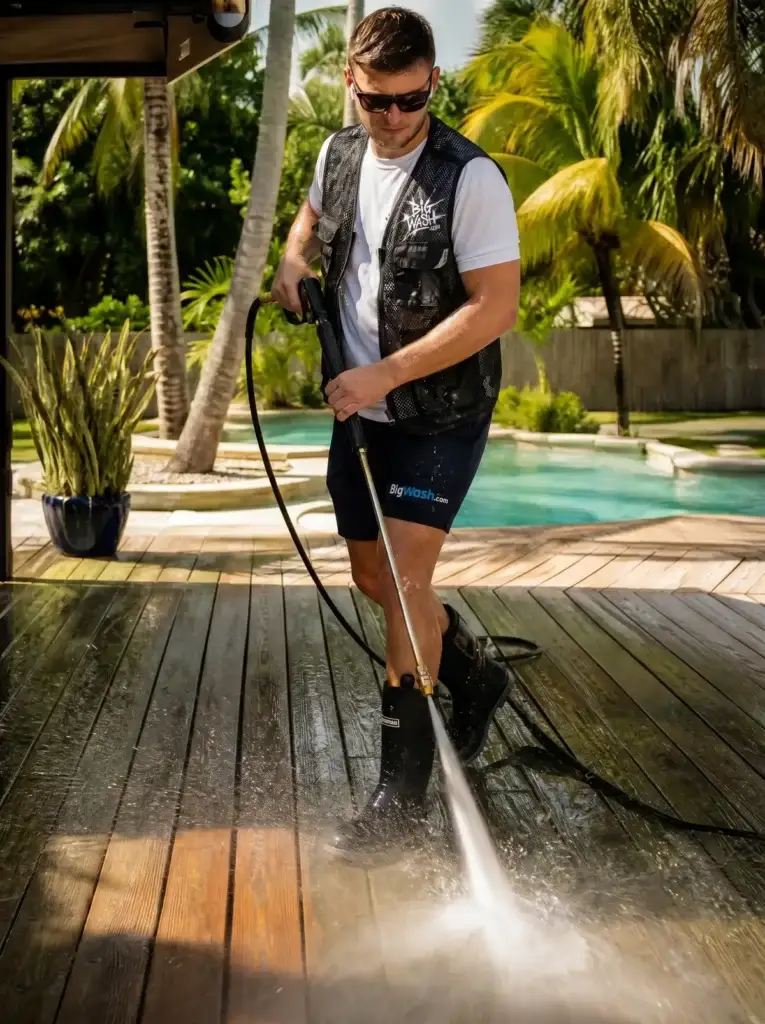
A wooden deck does best with a gentle cleaning about twice a year, roughly every 6 months, to lift mildew and surface grime before it sinks into the grain. Decks under heavy tree cover or constant shade can need attention every 4 months, since they trap moisture and grow that gray film faster.
If you are oceanfront, salt and sand are abrasive and drying, so a freshwater rinse every few weeks plus a full clean every 4 to 5 months keeps the boards healthy. Many coastal decks also benefit from re-oiling or resealing every 1 to 2 years.
In the hot, humid season, mildew returns quickly, so a light mid-summer wash helps. In cooler months, a deck stays presentable longer. Materials we use include a wood-safe sodium-percarbonate cleaner, a brightener to restore color, and a penetrating oil or sealant on request. Machinery includes a soft-wash applicator and a low-pressure surface rinse, never high pressure, which would fur and gouge the wood.
Fence Cleaning
THE SCIENCE BEHIND THE DIRT:
Why does one side of your fence turn green way before the other?
Because the shady side stays damp longer, turning it into a vertical garden for algae.
THE DIRTY NUMBERS:
Florida fences can grow visible algae in as little as 3 to 6 months.
YOUR WASH WINDOW:
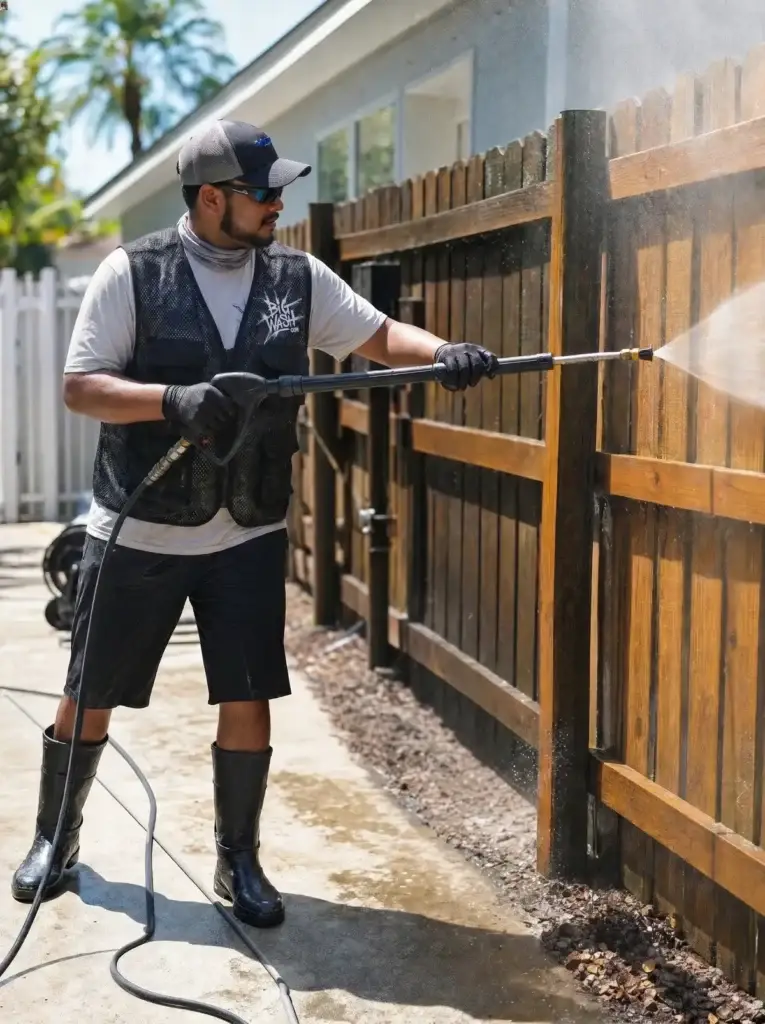
Plan on cleaning a fence every 6 to 12 months depending on material and shade. Vinyl and aluminum can stretch toward once a year, while wood fences and anything on the shaded, damp side benefit from every 6 months before algae digs in.
Coastal fences face salt spray that dulls finishes and accelerates corrosion on metal hardware, so a rinse every couple of months and a full wash every 6 months protects them. Wood fences near the ocean may also want a fresh seal or stain every 1 to 2 years.
Growth peaks in the warm rainy season, so a fence cleaned in spring often wants a light refresh by late summer. In the cooler dry season it stays green-free longer. Materials we use include a soft-wash algaecide blend, a wood or vinyl-safe surfactant, and an optional sealant for wood. Machinery includes a soft-wash system and a low-pressure fan tip that cleans without splintering wood or denting panels.

Gutter Cleaning
THE SCIENCE BEHIND THE DIRT:
How much water actually runs through your gutters in a single Florida storm?
Over 1,000 gallons, and when they clog, all of it pours straight into your foundation instead of away from it.
THE DIRTY NUMBERS:
Florida averages more than 50 inches of rain a year, and your gutters handle every drop.
YOUR WASH WINDOW:
Gutters should be cleared and flushed at least twice a year, around every 6 months, and ideally just before the summer storm season and again as it winds down. Homes surrounded by trees, especially oaks and pines that constantly drop debris, often need clearing every 3 to 4 months to prevent clogs.
Near the coast, salt and fine sand collect in the channels and the exterior gets a grimy film, so a wash and flush every 4 to 6 months keeps them flowing and looking clean.
The rainy season is the critical window, since a clogged gutter during a downpour sends water straight into your foundation and fascia. A pre-season clean is the single most valuable one. Materials we use include a biodegradable exterior gutter brightener to remove tiger striping and a foaming degreaser. Machinery includes scoops and a high-reach flushing wand, plus a gutter vacuum for two-story runs so we clear them safely from the ground where possible.
House Washing
THE SCIENCE BEHIND THE DIRT:
Why does a Florida home look faded even when the paint is fine?
Because it's wrapped in a thin, invisible layer of algae and pollen that washes right off.
THE DIRTY NUMBERS:
A clean exterior can lift curb appeal value by up to 5 to 10% at sale time.
YOUR WASH WINDOW:
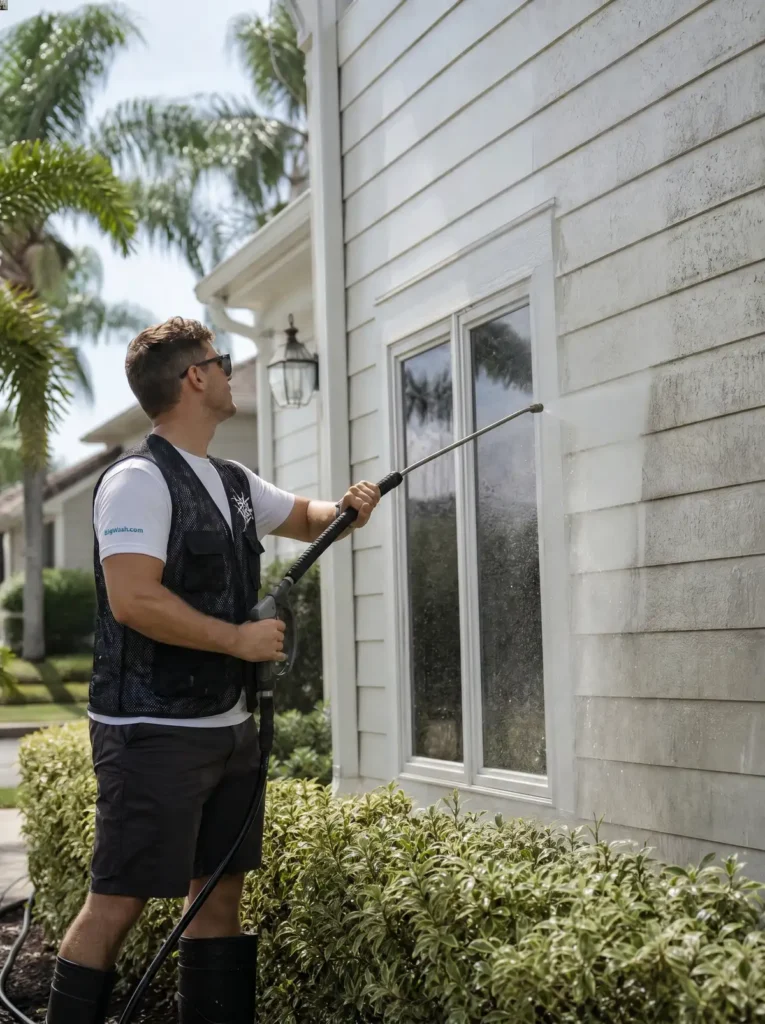
A full house wash once a year keeps the exterior bright and stops algae, mildew, and pollen from settling into the surface. Homes in shaded, tree-heavy, or humid pockets often benefit from every 8 to 9 months, since the north and shaded walls green over first.
Coastal homes take a double hit of salt film and humidity, so a soft wash every 6 to 9 months protects both the look and the paint, and a freshwater rinse of salt-facing walls between cleanings helps even more.
In the warm, wet season algae returns fastest, so a spring wash may want a light follow-up by fall. In the dry, cooler months the exterior stays clean longer. Materials we use include a sodium-hypochlorite soft-wash solution, a surfactant for cling and even coverage, and a mildewcide. Machinery includes a soft-wash system with low-pressure tips that clean siding, stucco, and trim without forcing water behind them, never high pressure on the walls themselves.
Mold, Mildew & Algae Removal / Disinfecting
THE SCIENCE BEHIND THE DIRT:
Why do those black streaks keep coming back no matter how often you wipe them?
Because they're alive. It's a growing colony feeding on your home and thriving in the humidity.
THE DIRTY NUMBERS:
Florida’s average humidity sits around 74% making it one of the most mold-friendly states in America.
YOUR WASH WINDOW:
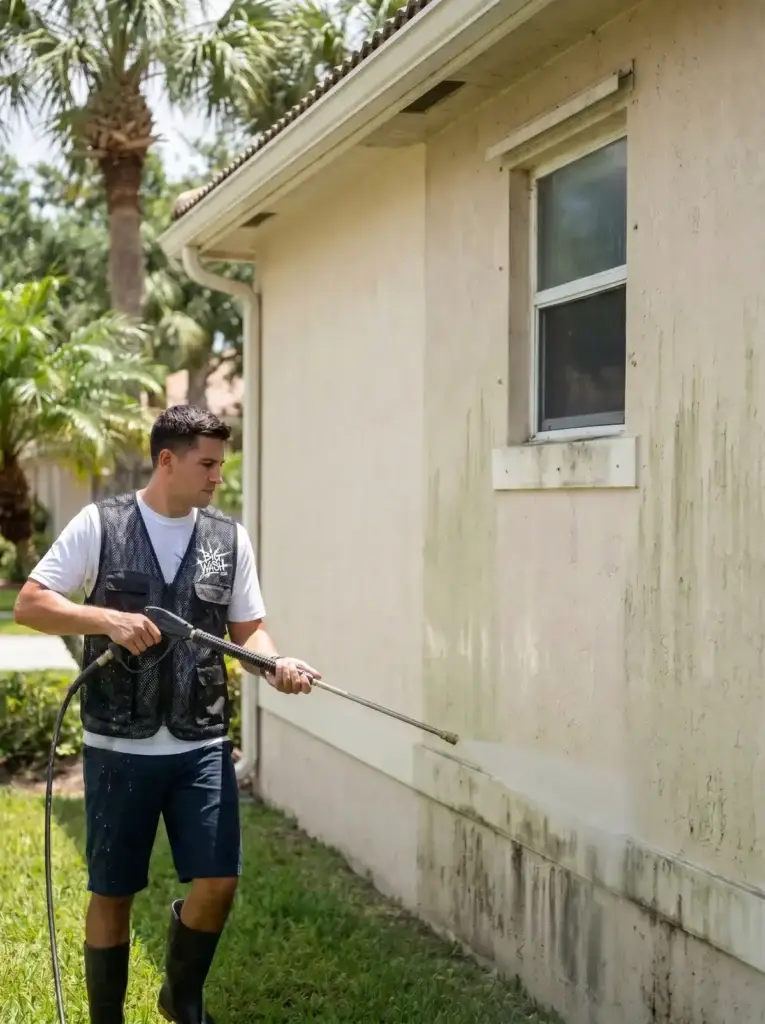
Because these are living colonies, treatment frequency depends on how fast they return. Most Florida surfaces benefit from a treatment every 6 to 12 months, but problem areas that stay shaded and damp can need attention every 3 to 6 months to keep regrowth in check.
Coastal humidity and salt create an even friendlier environment for growth, so oceanfront properties often land on the shorter end of that range, around every 4 to 6 months for the worst-affected walls and surfaces.
The warm rainy season is peak growth time, so a treatment going into summer pays off most. Materials we use include a sodium-hypochlorite treatment that kills growth at the root rather than just bleaching it, plus a surfactant and a mildewcide for lasting protection. Machinery includes a soft-wash system and low-pressure application so the solution does the work chemically, reaching deep into pores where scrubbing cannot.
Pool Cleaning
THE SCIENCE BEHIND THE DIRT:
How fast can a clean blue pool turn into a green swamp?
Under 48 hours in the Florida summer once algae takes hold.
THE DIRTY NUMBERS:
With 9 or more months of warm water a year, Florida pool owners fight algae blooms almost nonstop.
YOUR WASH WINDOW:
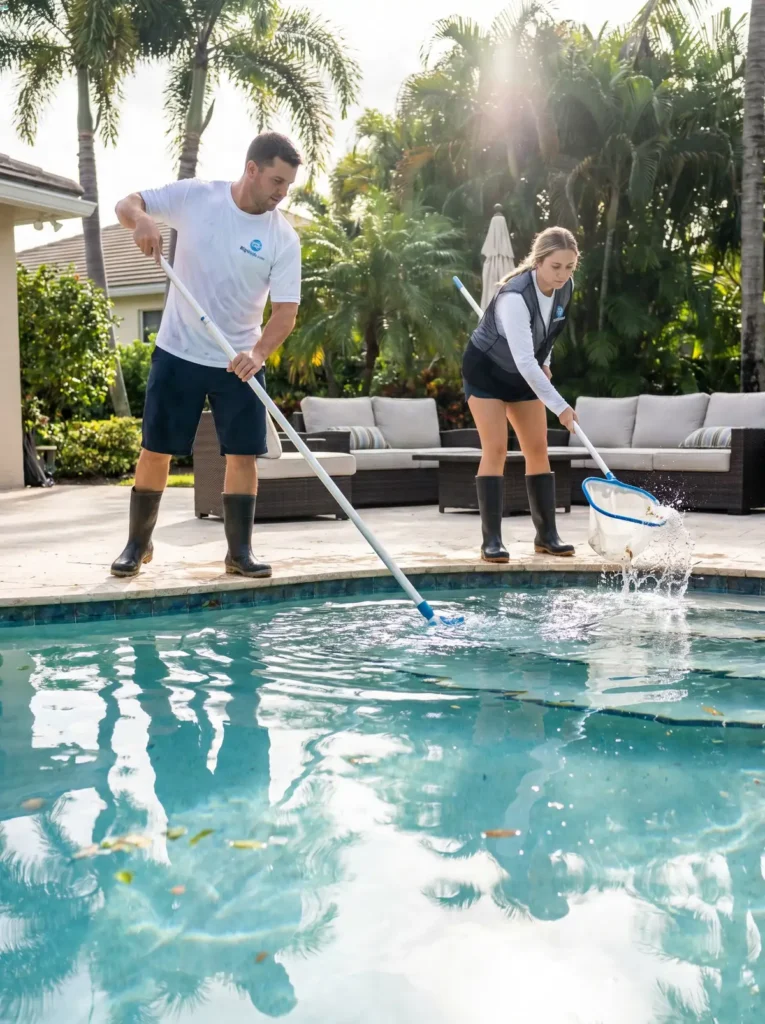
The pool deck and surrounding hardscape benefit from a cleaning every 4 to 6 months to keep algae, mildew, and stains off the surfaces around the water. High-use pools and those ringed by trees or screens can need it every 3 to 4 months.
Coastal pools collect salt residue and wind-blown sand on the deck and cage, so a rinse and clean every 3 to 4 months keeps the area safe and sharp underfoot.
In the long warm season, algae on damp deck surfaces becomes a slip hazard fast, so more frequent cleaning matters most then. In cooler months you can stretch the interval. Materials we use include a deck-safe algaecide and a surfactant gentle on pavers, stamped concrete, and screen framing. Machinery includes a surface cleaner for even deck results and a soft-wash applicator for the cage and screens.
Pool Cage & Screen Enclosure Cleaning
THE SCIENCE BEHIND THE DIRT:
Why does your screen enclosure get grimy even though it's outdoors?
Because it works like a giant air filter, trapping pollen, mold, and love bugs until it clogs.
THE DIRTY NUMBERS:
Keeping it clean adds years to a structure that costs $5,000 to $15,000 or more to replace.
YOUR WASH WINDOW:
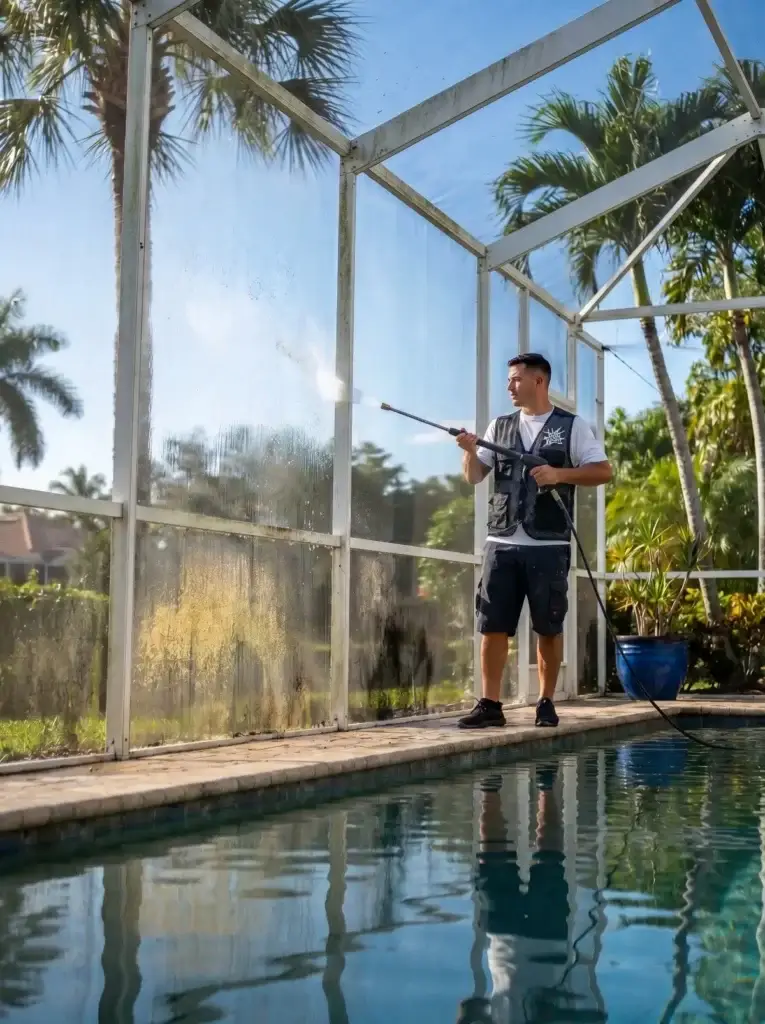
A screen enclosure does best with a thorough cleaning once or twice a year, roughly every 6 to 12 months, to clear the mold, pollen, and love-bug residue that clog the mesh and stain the frame. Enclosures under heavy tree cover or beside a pool that runs year-round often want every 6 months.
Coastal cages take on salt that corrodes the aluminum frame and hardware, so a gentle rinse every 2 to 3 months plus a full clean every 6 months noticeably extends the structure’s life.
Pollen season (late winter into spring) and the love-bug surges (spring and fall) are the times the mesh clogs fastest, so timing a clean right after those helps. Materials we use include a frame-safe, plant-based cleaner gentle on screen mesh and a mild mildewcide. Machinery is strictly low-pressure soft washing, since the screens and spline tear under real pressure, applied with a soft-wash wand and rinsed thoroughly.
Roof Cleaning
THE SCIENCE BEHIND THE DIRT:
What are those black streaks slowly spreading across Florida roofs?
Algae that literally eat the limestone filler inside your shingles.
THE DIRTY NUMBERS:
Left untreated, roof algae can slash a shingle roof’s lifespan by up to 50%.
YOUR WASH WINDOW:
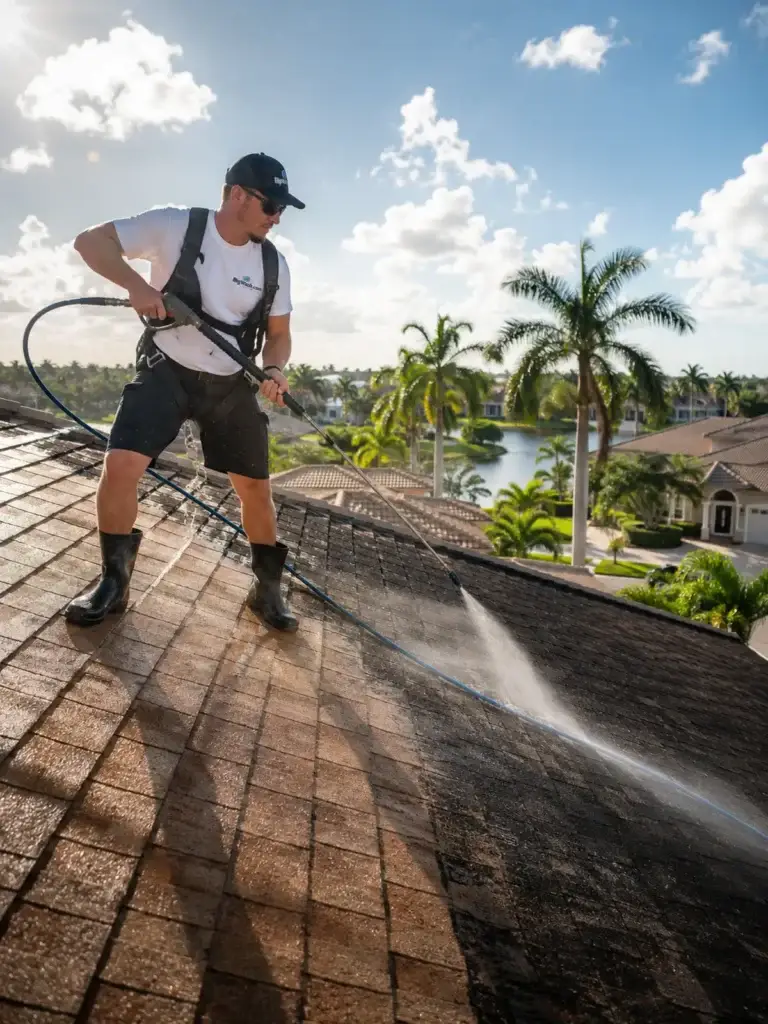
A soft-wash roof treatment every 18 to 24 months keeps the black streaks (a hardy algae called Gloeocapsa magma) from spreading and feeding on your shingles. Roofs heavily shaded by trees or holding moisture can need it closer to every 12 to 18 months.
Coastal roofs deal with salt and constant humidity that feed growth, so the shorter end of that range, around every 12 to 18 months, protects them best. Tile and metal roofs follow similar timing but tolerate treatment well.
Growth accelerates through the warm rainy season, so a treatment is most effective heading into or just after summer. Crucially, roofs are always soft washed, never pressure washed, because high pressure strips the protective granules and voids most shingle warranties. Materials we use include a sodium-hypochlorite blend matched to roof type and a surfactant that clings to the slope. Machinery is a dedicated soft-wash system with low-pressure roof tips and safety lines for steep pitches.
Siding Cleaning
THE SCIENCE BEHIND THE DIRT:
Why does clean siding suddenly look brand new when you never noticed it was dirty?
Because the grime builds up so gradually that your brain stops seeing it.
THE DIRTY NUMBERS:
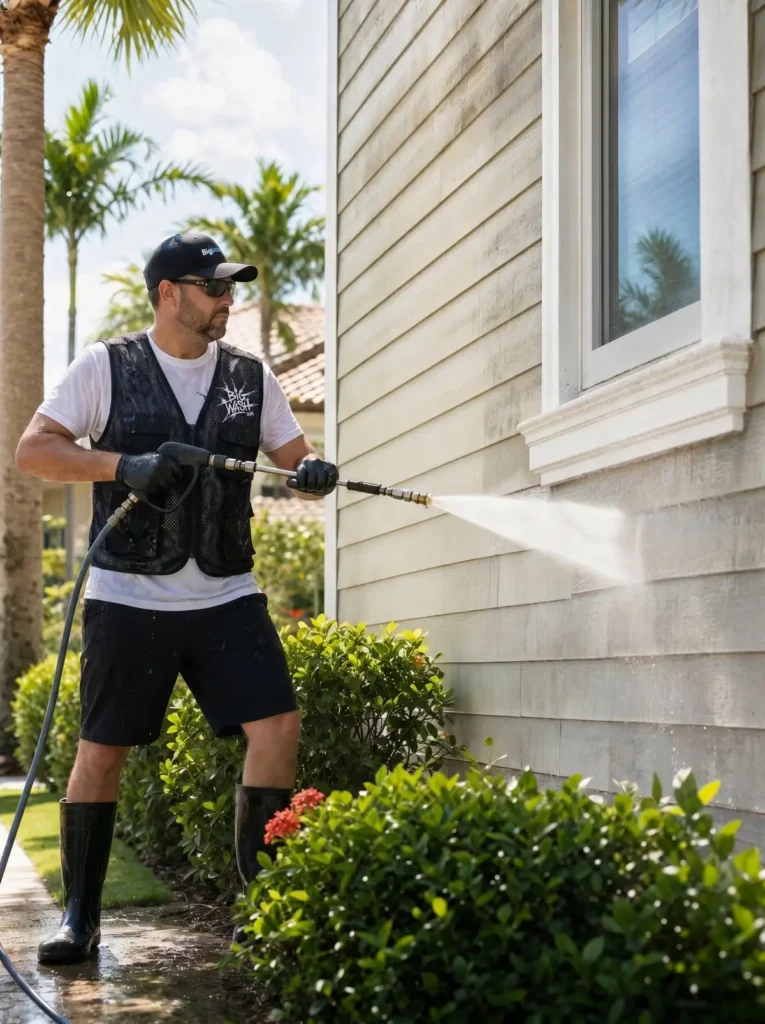
Routine soft washing protects a surface that can cost $10,000 or more to replace.
YOUR WASH WINDOW:
Soft Washing
THE SCIENCE BEHIND THE DIRT:
Why can washing your home the wrong way actually damage it?
Because high pressure can carve into surfaces and strip them, while soft washing cleans deeper without the harm.
THE DIRTY NUMBERS:
Soft washing kills algae at the root and keeps surfaces clean up to 3 to 4 times longer than pressure alone.
YOUR WASH WINDOW:
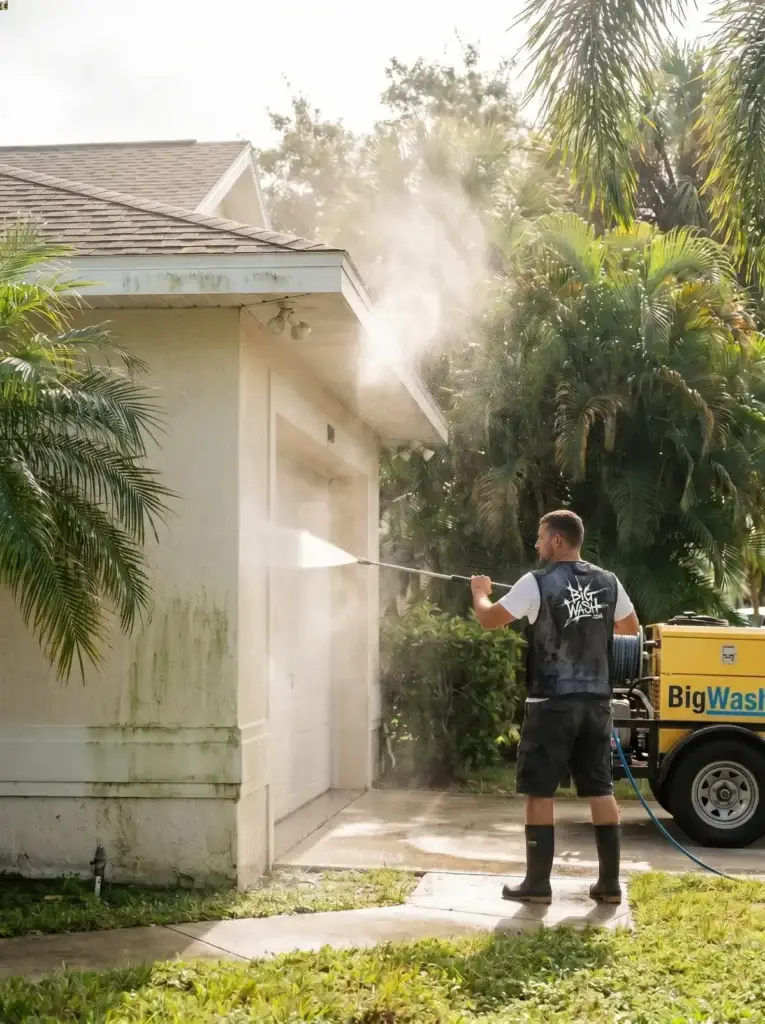
Soft washing is the method behind most of our exterior services, and the right interval depends on the surface: roofs every 18 to 24 months, house exteriors and siding about once a year, and screens, fences, and shaded surfaces every 6 to 12 months. The common thread is that soft washing kills growth at the root, so results last far longer than pressure washing.
Coastal properties shorten every interval because salt and humidity speed up regrowth, so plan on the earlier end across the board near the ocean.
The warm, humid season is when biological growth returns fastest, so timing soft washes around it gives the best year-round look. Materials we use include sodium-hypochlorite blends tuned to each surface, surfactants for cling and even coverage, and mildewcides for longer protection. Machinery is a dedicated soft-wash system with downstream injectors and low-pressure tips, the opposite of a high-pressure approach, so delicate surfaces are cleaned chemically rather than blasted.
Solar Panel Cleaning
THE SCIENCE BEHIND THE DIRT:
Why would solar panels underperform in the Sunshine State of all places?
Because a quiet layer of dust and pollen blocks the sun every single day.
THE DIRTY NUMBERS:
Dirty panels can lose 15 to 25% of their output.
YOUR WASH WINDOW:
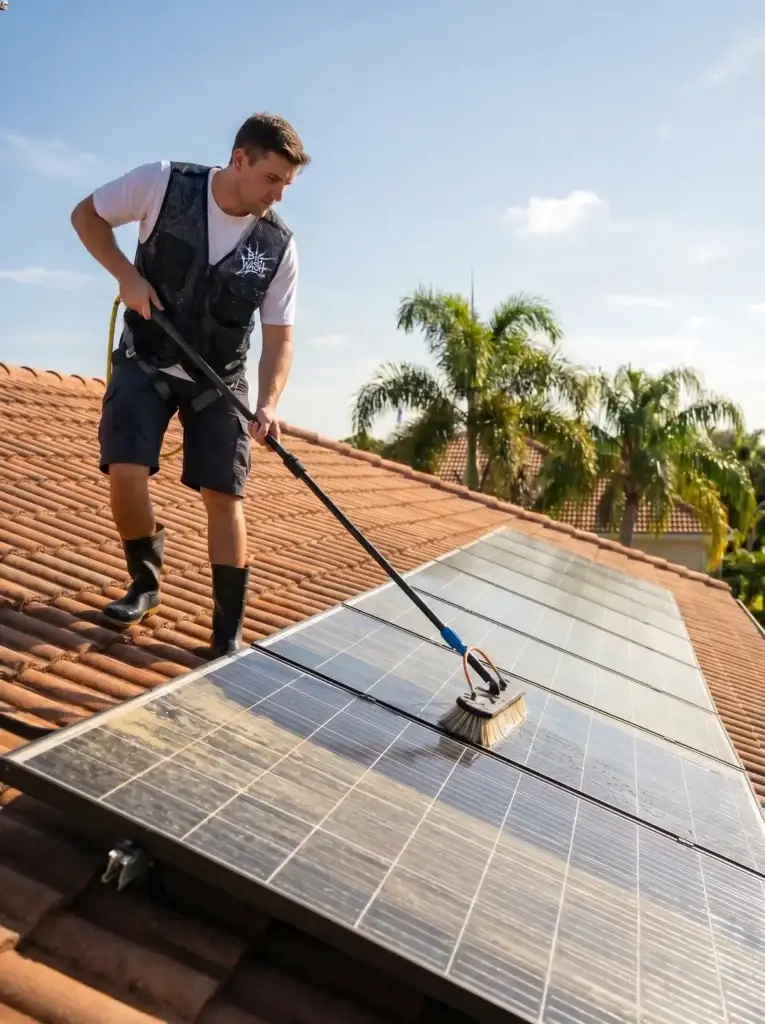
Solar panels do best with a cleaning every 6 months to clear the dust, pollen, and bird droppings that quietly cut output. In heavy-pollen season or near dusty roads and farmland, every 3 to 4 months can pay for itself in recovered energy production.
Coastal panels collect a salt haze that both blocks light and can etch the glass over time, so every 4 to 6 months keeps them performing and protects the surface.
Spring pollen and the summer sun (when production matters most) make those the key windows to clean. Materials we use include deionized or purified water that dries spot-free, a pH-neutral panel-safe soap, and no harsh chemicals that could damage the anti-reflective coating. Machinery includes a water-fed pole with a soft brush and a deionized water system, applied at low pressure so the panels and seals are never stressed.
Stucco Cleaning
THE SCIENCE BEHIND THE DIRT:
Why is stucco so hard to keep clean compared to flat walls?
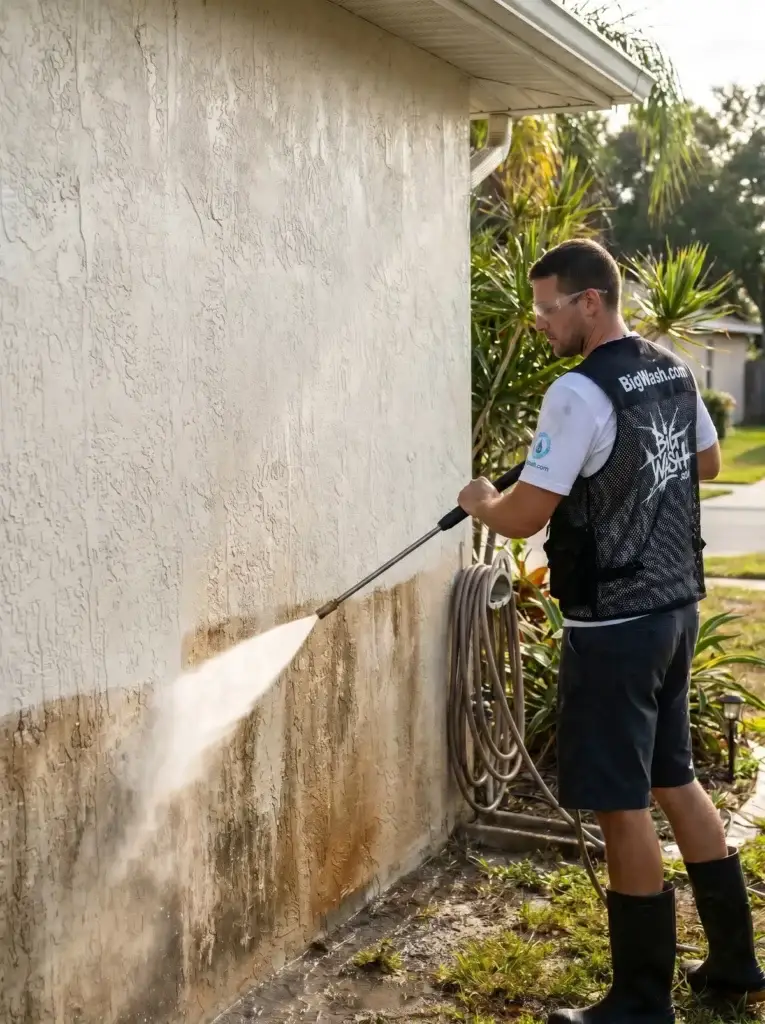
Because its bumpy texture hides dirt and grows algae deep in the grooves where a hose can't reach.
THE DIRTY NUMBERS:
Stucco staining is one of the most common exterior complaints in humid Florida.
YOUR WASH WINDOW:
Stucco benefits from a soft wash every 12 to 18 months, since its rough, porous texture traps moisture and grows algae deep in the grooves. Shaded or north-facing stucco walls that stay damp often want every 9 to 12 months.
Coastal stucco absorbs salt that accelerates staining and efflorescence, so every 8 to 12 months keeps it clean, sometimes paired with a breathable masonry sealer to slow future staining.
The warm rainy season drives the deepest growth, so timing a wash around it helps most. Materials we use include a sodium-hypochlorite soft-wash blend, a surfactant that works into the texture, and an optional breathable sealer. Machinery is a soft-wash system with low-pressure application, since high pressure chips and pits stucco and can blow out hairline cracks into bigger ones.
Window Cleaning
THE SCIENCE BEHIND THE DIRT:
Why do some windows stay cloudy no matter what cleaner you use?
Because Florida's hard water and salt air can permanently etch the glass, and once it's etched, no cleaner can fix it.
THE DIRTY NUMBERS:
Mineral deposits can scar glass for good within just 2 to 3 years.
YOUR WASH WINDOW:
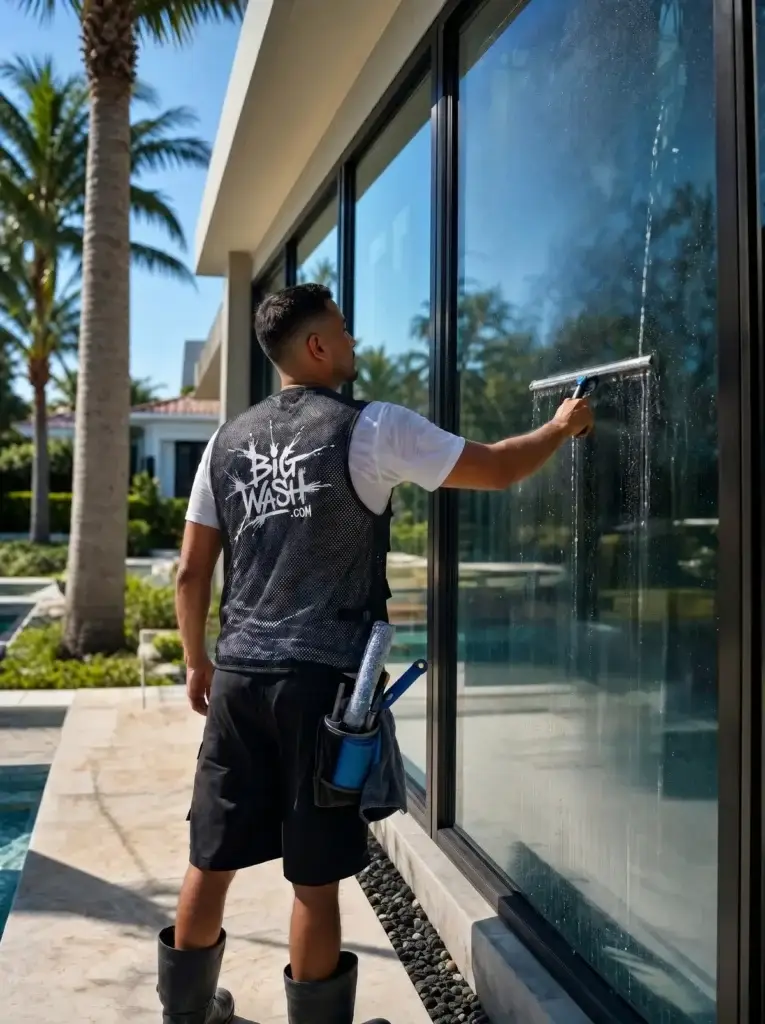
Windows look their best with a cleaning every 3 to 4 months, since Florida’s pollen, rain spotting, and dust build quickly on glass. Quarterly is the sweet spot for most homes, while homes near busy roads or construction may want every 2 months.
Coastal windows face salt spray that not only films the glass but can permanently etch it if left, so every 2 to 3 months with a thorough rinse protects the glass itself, not just the view.
Pollen season (late winter into spring) is the heaviest, so a clean right after it makes a dramatic difference. Materials we use include purified or deionized water for a spot-free finish, a streak-free glass solution, and a mineral-deposit remover for hard-water staining. Machinery includes a water-fed pole system for upper floors, professional squeegees, and a deionized water setup that leaves no residue behind.
Brick Paver Cleaning & Sealing
THE SCIENCE BEHIND THE DIRT:
Why do unsealed pavers attract weeds, stains, and even ants?
Because they soak everything up like a sponge.
THE DIRTY NUMBERS:
Sealing can extend a paver’s color and life by 5 to 10 years under Florida’s brutal sun.
YOUR WASH WINDOW:
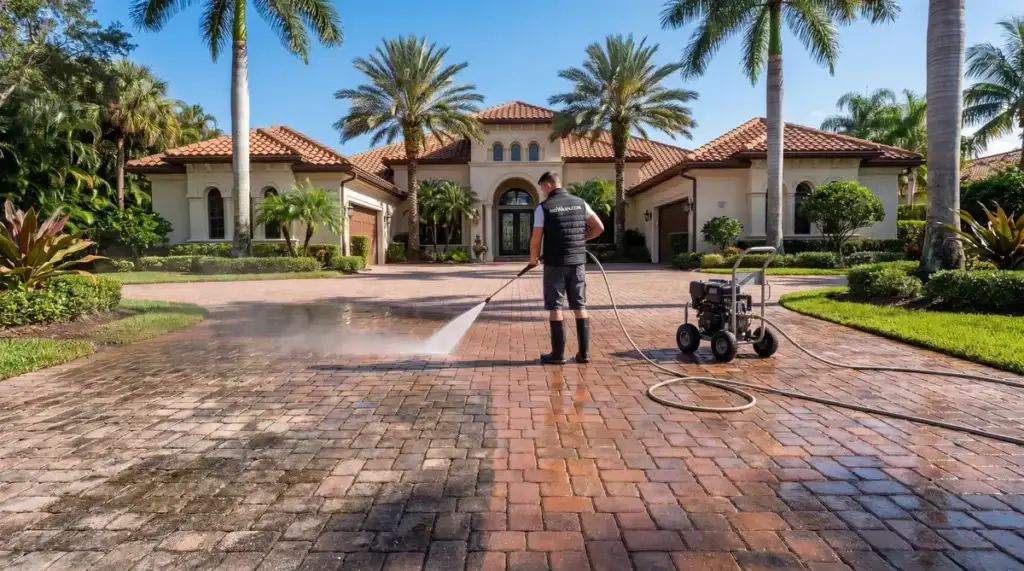
Pavers benefit from a cleaning every 12 months to lift the algae, weeds, and stains that settle into the joints and porous surface. Sealing is the longer cycle: most paver areas want resealing every 2 to 3 years, since Florida sun and rain wear the sealer down.
Coastal pavers take on salt that fades color and feeds growth, so cleaning every 9 to 12 months and resealing every 2 years keeps them sharp, and the sealer also helps lock out salt intrusion.
The warm rainy season grows weeds and algae in the joints fastest, so a clean heading into or after summer helps. Materials we use include a paver-safe cleaner, a polymeric sand for re-jointing, and a breathable paver sealer (matte or wet-look). Machinery includes a surface cleaner for even results, a low-pressure rinse, and a sealer sprayer for smooth, controlled application.
Concrete Cleaning / Surface Cleaning
THE SCIENCE BEHIND THE DIRT:
Why does concrete stain so easily when it feels rock solid?
Because it's actually porous, so every spill and spore sinks right in.
THE DIRTY NUMBERS:
A surface cleaner does in minutes what a garden hose can’t finish in a whole weekend.
YOUR WASH WINDOW:
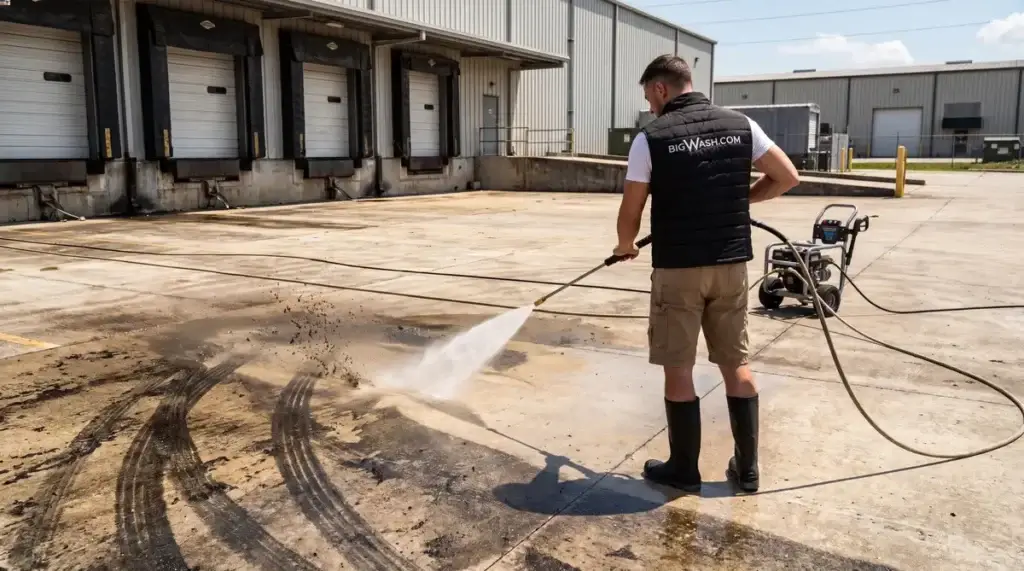
Concrete surfaces do best with a cleaning every 6 to 12 months to keep algae, mildew, and stains from setting into the pores. High-traffic or shaded concrete that stays damp can want every 4 to 6 months, since those areas grow slick and dark fastest.
Coastal concrete collects salt and wind-blown grit, so every 6 months keeps it clean and safe underfoot, and a sealer can be added to slow future staining.
The warm wet season drives algae growth that makes concrete slippery, so timing a clean around it improves both looks and safety. Materials we use include a concrete-safe degreaser, a sodium-hypochlorite blend for organic stains, and an optional sealer. Machinery is a flat-surface cleaner (a spinning-bar attachment) that delivers even, line-free results far faster and more uniformly than a wand alone.
Concrete Sealing
THE SCIENCE BEHIND THE DIRT:
Why does unsealed concrete crack and stain faster in Florida?
Because without a sealant, the sun and rain attack it directly. It's like skipping sunscreen for your driveway.
THE DIRTY NUMBERS:
Sealed concrete resists stains and cracking, adding years of surface life.
YOUR WASH WINDOW:
Concrete should be cleaned first, then sealed, with resealing every 2 to 3 years to keep the protective barrier intact against Florida sun, rain, and stains. The cleaning underneath follows normal concrete timing, every 6 to 12 months, but the seal itself is the multi-year cycle.
Coastal concrete benefits from sealing on the shorter side, around every 2 years, since salt and intense sun break the sealer down faster, and a good seal helps resist salt-driven surface damage.
Seal during the drier, milder months when the slab can fully cure without rain interruptions, rather than mid-storm-season. Materials we use include a concrete-safe cleaner and degreaser to prep, followed by a penetrating or film-forming sealer chosen for the surface and finish. Machinery includes a surface cleaner for prep and a low-pressure sprayer or roller for even sealer application, with full dry time between steps.
Driveway Cleaning
THE SCIENCE BEHIND THE DIRT:
What's the dirtiest surface on your entire property?
Your driveway, which also happens to be the biggest welcome mat you own.
THE DIRTY NUMBERS:
Cleaning it is one of the fastest and cheapest curb-appeal upgrades possible.
YOUR WASH WINDOW:
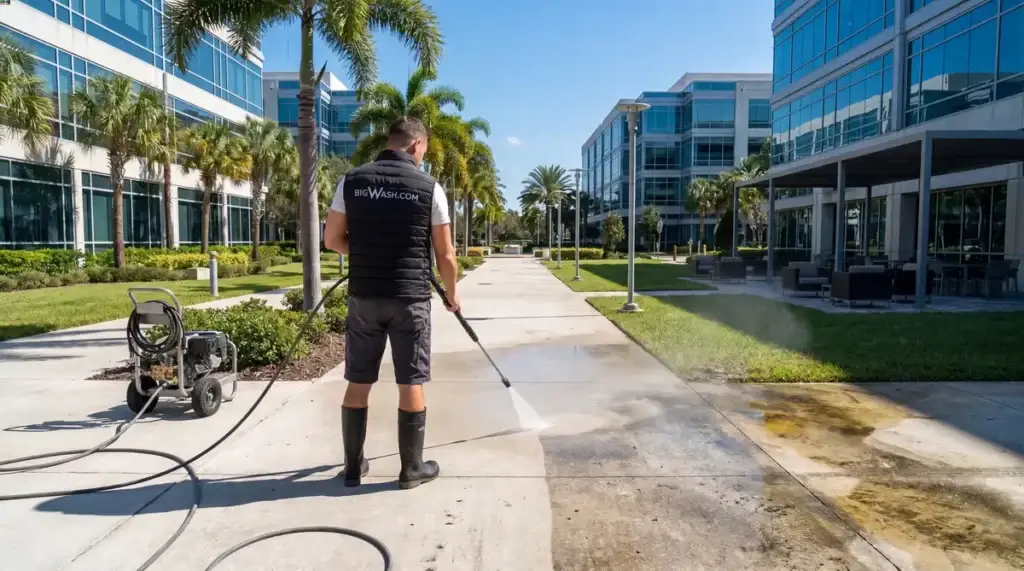
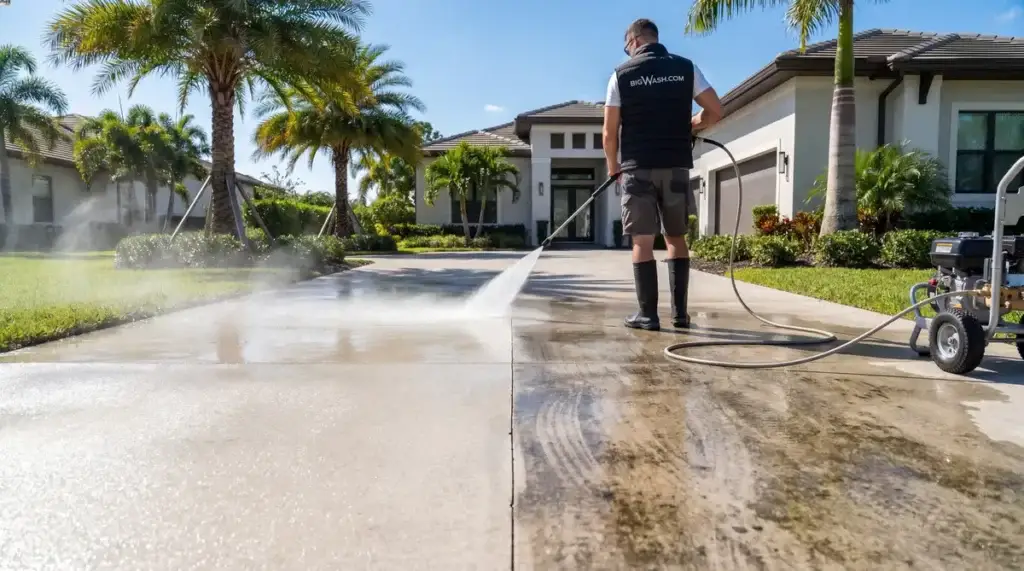
A driveway does best with a cleaning every 6 to 12 months to clear oil spots, tire marks, algae, and the gray grime that dulls the surface. Driveways under trees or in shade often want every 4 to 6 months, since they grow slick and stained faster.
Coastal driveways take on salt and sand that wear the surface and feed growth, so every 6 months keeps them clean and sound, and a sealer can extend the intervals.
The warm rainy season grows the most algae, which makes a driveway both unsightly and slippery, so timing a clean around it helps. Materials we use include a concrete or paver degreaser for oil, a sodium-hypochlorite blend for organic staining, and an optional sealer. Machinery is a flat-surface cleaner for fast, even, stripe-free results, plus a wand for edges and stubborn spots.
Graffiti Removal
THE SCIENCE BEHIND THE DIRT:
Why does graffiti seem to attract even more graffiti?
Because taggers love a canvas that sticks around.
THE DIRTY NUMBERS:
Removal within 24 to 48 hours is the single best deterrent against repeat tagging.
YOUR WASH WINDOW:
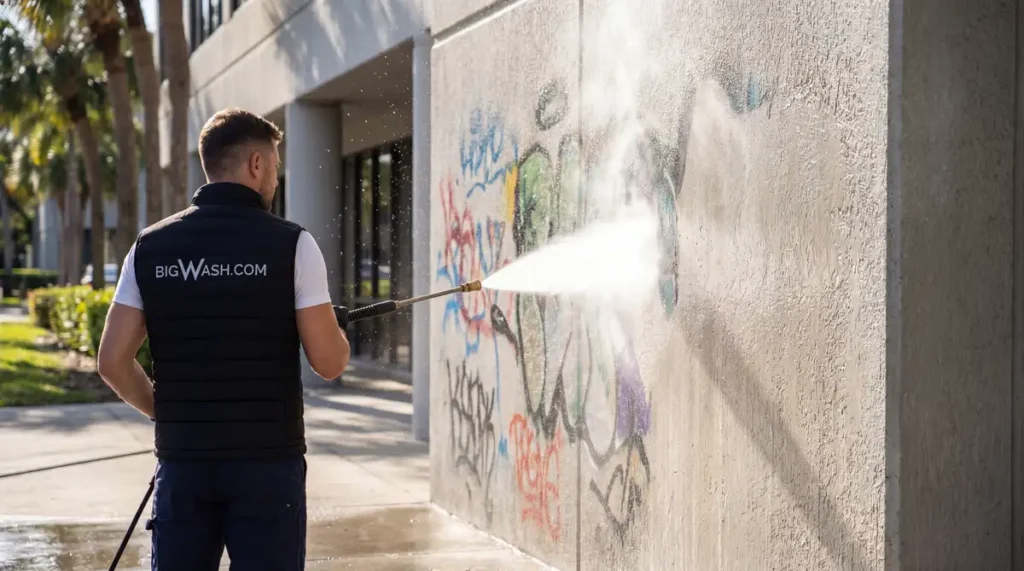
Graffiti is the one service where speed beats schedule: the goal is removal within 24 to 48 hours of it appearing, because fast removal is the single strongest deterrent against repeat tagging. For high-target walls, a protective anti-graffiti coating can be applied so future tags wipe off far more easily.
Coastal and high-visibility commercial walls near the water often see more frequent tagging, so a sacrificial anti-graffiti coating reapplied every 1 to 2 years makes ongoing removal much quicker and cheaper.
There is no warm-versus-cool season pattern here; it is reactive. Materials we use include surface-specific graffiti removers (different formulas for masonry, metal, and painted surfaces), eco-conscious solvents, and optional sacrificial or permanent anti-graffiti coatings. Machinery includes targeted low-to-medium pressure application and, for delicate surfaces, soft-wash chemical removal to avoid etching the wall underneath.
Patio Cleaning
THE SCIENCE BEHIND THE DIRT:
Why does your patio get slippery and dingy between seasons?
Because mildew quietly moves into the shaded, damp spots.
THE DIRTY NUMBERS:
Florida patios can grow visible algae from one season to the next.
YOUR WASH WINDOW:
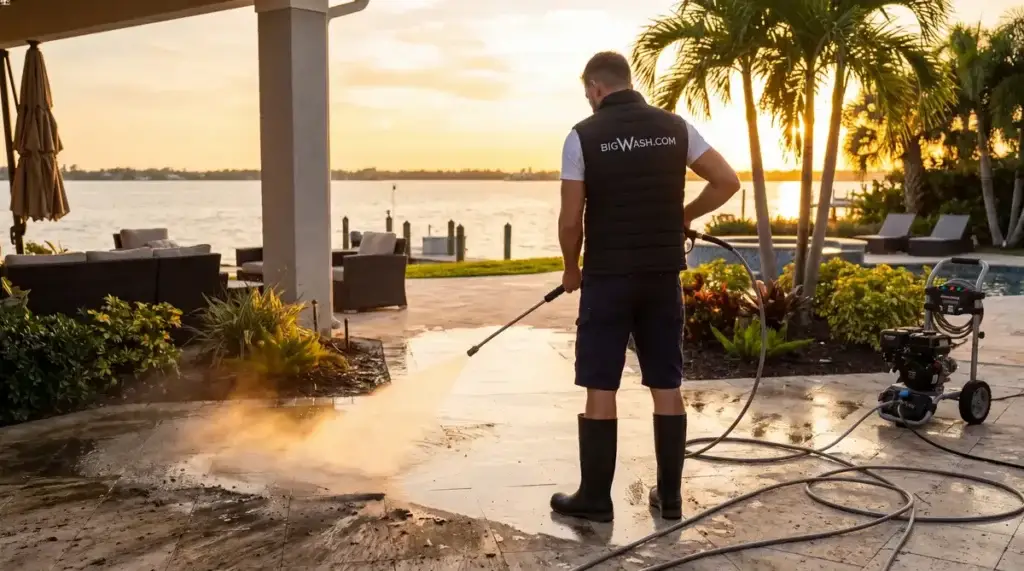
A patio benefits from a cleaning every 6 months to keep mildew and algae from making the surface dingy and slick. Shaded or screened patios that hold moisture can want every 4 months, since they grow that film fastest.
Coastal patios collect salt and sand that dull pavers and feed growth, so every 4 to 6 months keeps them clean and safe underfoot.
The warm rainy season is when patios grow slippery fastest, so a clean heading into summer pays off for both looks and safety. Materials we use include a surface-appropriate cleaner (paver, concrete, or stone safe), a sodium-hypochlorite blend for organic growth, and an optional sealer for pavers. Machinery is a flat-surface cleaner for even results plus a soft-wash rinse for surrounding walls and screens.
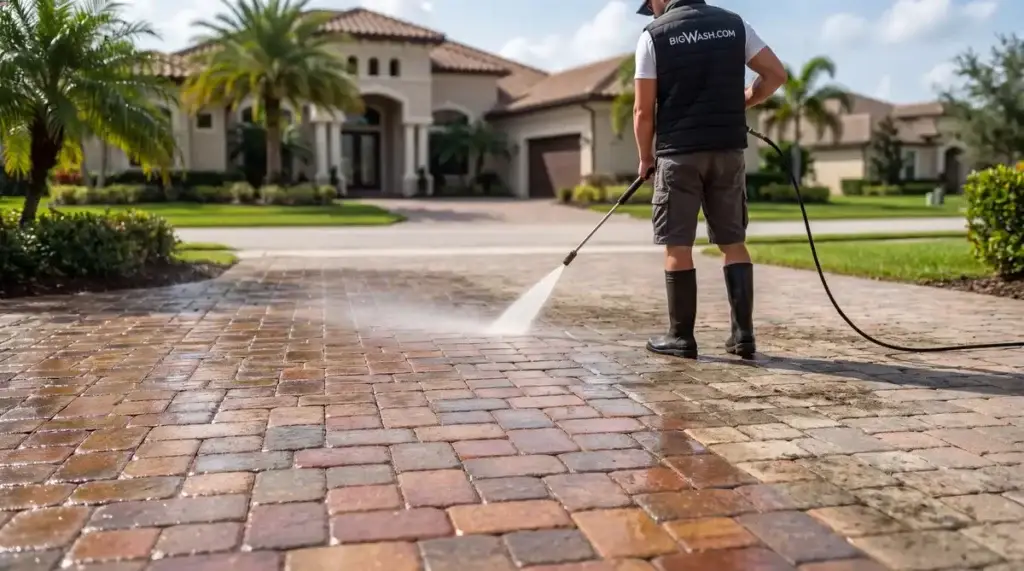
Paver Cleaning & Sealing
THE SCIENCE BEHIND THE DIRT:
Why isn't cleaning your pavers enough on its own?
Because cleaning without sealing is like washing your car and parking it in a sandstorm.
THE DIRTY NUMBERS:
Sealed pavers lock out weeds and resist fading through Florida’s harshest months.
YOUR WASH WINDOW:
Pavers want a cleaning every 12 months and resealing every 2 to 3 years. The seal is what locks out weeds, stabilizes the joint sand, and protects the color from Florida’s sun, so keeping it fresh is what makes the cleaning last.
Coastal pavers fade and take on salt faster, so cleaning every 9 to 12 months and resealing every 2 years keeps them looking new, and the sealer helps resist salt intrusion into the joints.
Clean and reseal during the drier, milder months so the sealer cures fully without rain. Materials we use include a paver-safe cleaner, polymeric joint sand, and a breathable matte or wet-look sealer. Machinery includes a surface cleaner for even cleaning, a low-pressure rinse, and a controlled sealer sprayer for a smooth, streak-free finish.
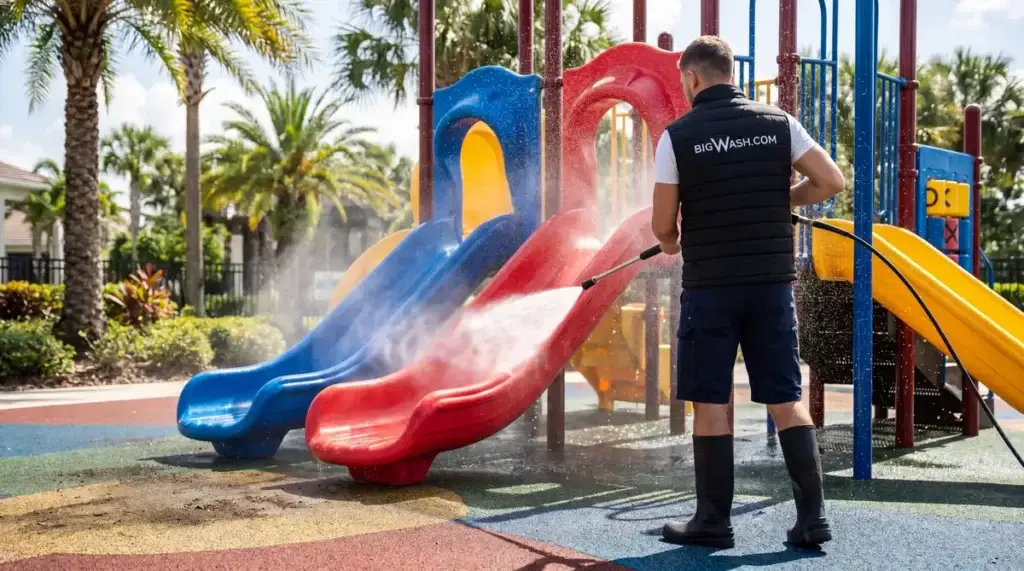
Playground Cleaning
THE SCIENCE BEHIND THE DIRT:
What's one of the germiest surfaces a child touches all day?
Playground equipment, which is high-touch and rarely cleaned properly.
THE DIRTY NUMBERS:
Playground equipment can carry up to 1,000 times more bacteria per square inch than a toilet seat.
YOUR WASH WINDOW:
Playgrounds and their surfaces benefit from a disinfecting clean every 1 to 3 months, since they are high-touch and used heavily. Commercial, school, and HOA playgrounds with constant use lean toward monthly, while lighter-use residential play areas can stretch to quarterly.
Coastal playgrounds collect salt and sand that wear surfaces and harbor grime, so every 1 to 2 months keeps both the equipment and the safety surfacing clean and sanitary.
Use peaks in the warm season and over school breaks, so cleaning more often during those stretches matters most. Materials we use include child-safe, plant-based disinfectants free of harsh residue, gentle on both kids and the equipment finishes. Machinery is strictly low-pressure soft washing with a sanitizing rinse, so we disinfect thoroughly without damaging plastic, rubber surfacing, or painted metal.
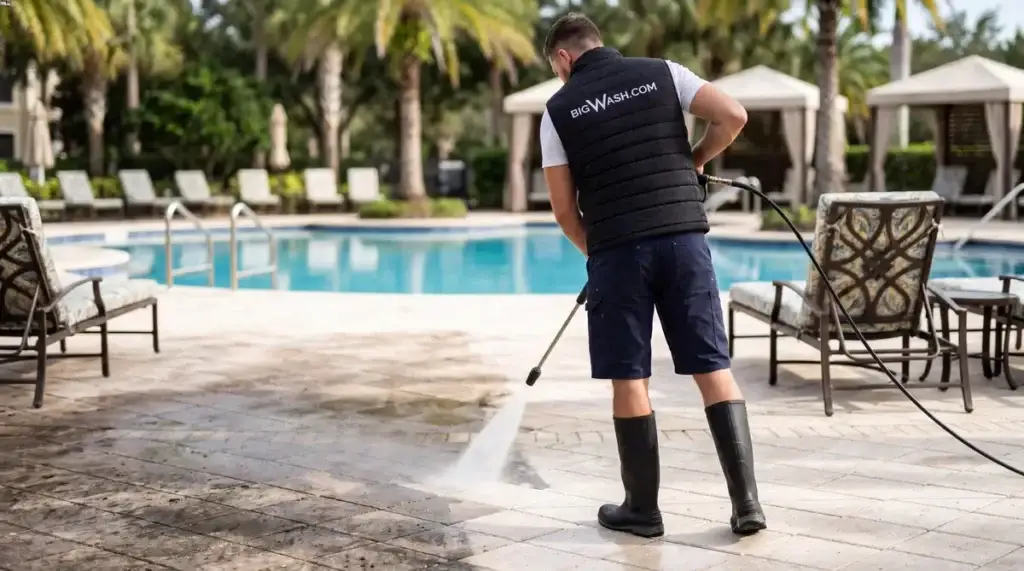
Pool Deck Cleaning
THE SCIENCE BEHIND THE DIRT:
Why does your pool deck get dangerously slippery over time?
Because that worn-in look is actually algae quietly coating the surface.
THE DIRTY NUMBERS:
Algae-covered pool decks are one of the most common causes of backyard slip-and-falls.
YOUR WASH WINDOW:
A pool deck does best with a cleaning every 4 to 6 months, since the constant moisture grows algae that makes the surface slick and unsafe. Screened or shaded pool decks, and those used year-round, often want every 3 to 4 months.
Coastal pool decks add salt and wind-blown sand to the mix, so every 3 to 4 months keeps them clean, bright, and safe underfoot, and a sealer can lengthen the intervals on pavers.
The long warm season is when algae growth peaks and the slip hazard is greatest, so more frequent cleaning then is a real safety measure. Materials we use include a deck-safe cleaner gentle on pavers, stamped concrete, and travertine, plus a sodium-hypochlorite blend for organic growth. Machinery is a flat-surface cleaner for even, line-free results and a soft-wash rinse for the surrounding cage and screens.
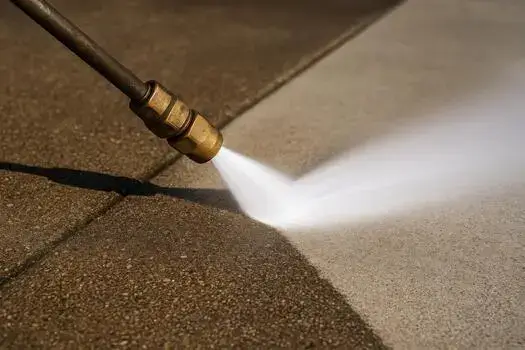
Pressure Washing
THE SCIENCE BEHIND THE DIRT:
Why does a fresh pressure wash feel so weirdly satisfying to watch?
Because grime builds so slowly that your brain edits it out, until one clean strip reveals how dirty it really was.
THE DIRTY NUMBERS:
Most surfaces hold a layer of buildup so gradual you don’t see it until it’s gone.
YOUR WASH WINDOW:
Retention Wall Cleaning
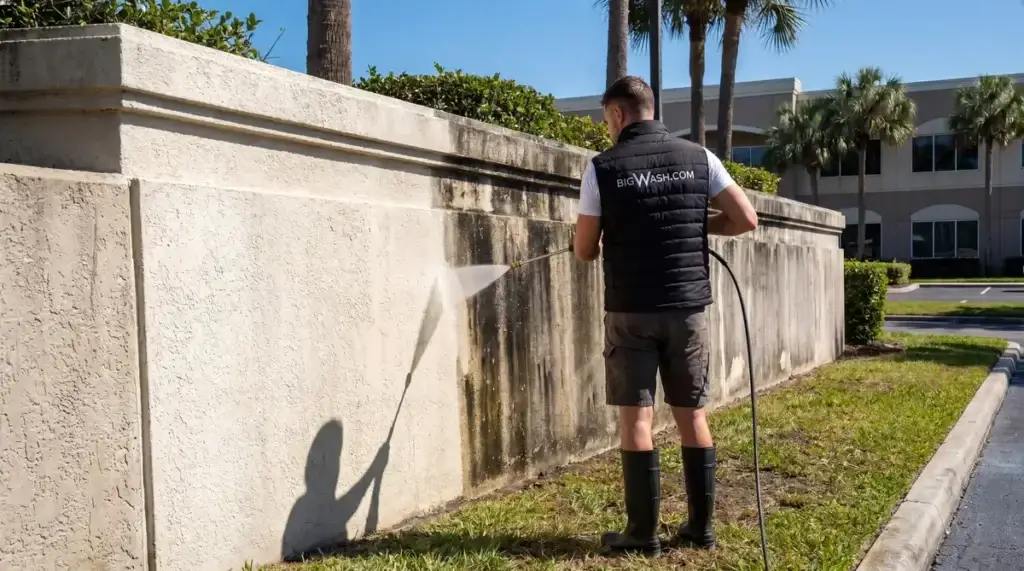
THE SCIENCE BEHIND THE DIRT:
Why do retention walls turn green faster than almost anything else?
Because they sit in near-constant moisture, making them prime algae real estate.
THE DIRTY NUMBERS:
An untreated wall can green over in a single Florida rainy season.
YOUR WASH WINDOW:
Retention walls benefit from a soft wash every 6 to 12 months, since they sit in near-constant moisture and green over quickly. Walls in shade or holding standing water nearby can need every 4 to 6 months.
Coastal retention walls add salt exposure to constant damp, so every 6 months keeps the algae and staining in check and helps protect the block and mortar.
The warm rainy season is exactly when these walls green over fastest, so a clean during or right after it makes the biggest difference. Materials we use include a sodium-hypochlorite soft-wash blend, a masonry-safe surfactant, and an optional breathable sealer for block walls. Machinery is a soft-wash system with low-pressure application, since high pressure can erode mortar joints and the face of the block.

Sidewalk Cleaning
THE SCIENCE BEHIND THE DIRT:
Why can one dirty sidewalk make a whole property look neglected?
Because it's the one surface everyone literally walks on and notices.
THE DIRTY NUMBERS:
Stained walkways are both a curb-appeal killer and a trip-hazard liability.
YOUR WASH WINDOW:
Sidewalks do best with a cleaning every 6 to 12 months to clear gum, stains, algae, and the gray grime that builds with foot traffic. Commercial and high-traffic walkways, or shaded ones that grow slick, often want every 3 to 6 months.
Coastal sidewalks collect salt and sand that wear and dull the surface, so every 6 months keeps them clean and safe, reducing slip and trip risk.
The warm rainy season grows the most algae, which is both a curb-appeal and a liability issue on a walkway, so timing a clean around it matters. Materials we use include a concrete-safe degreaser, a sodium-hypochlorite blend for organic staining, and a gum remover where needed. Machinery is a flat-surface cleaner for even, stripe-free results, plus an edging wand for borders and corners.
Breezeway Cleaning
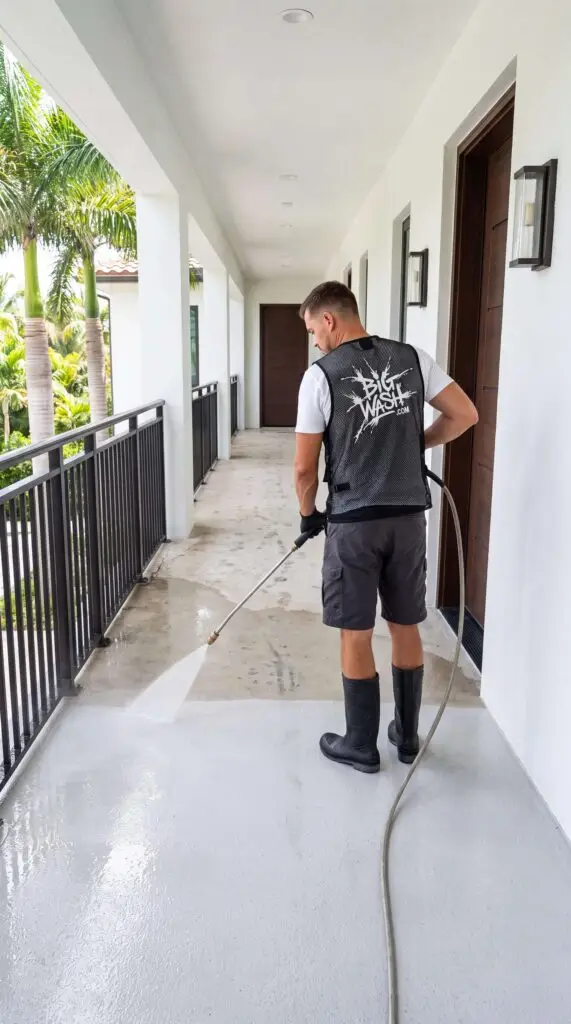
THE SCIENCE BEHIND THE DIRT:
Why do breezeways always look worn before the rest of the building?
Because they funnel every person and every speck of grime through one narrow path.
THE DIRTY NUMBERS:
That walkway sets the first impression for every tenant, guest, and inspector.
YOUR WASH WINDOW:
Breezeways in apartment and commercial buildings benefit from a cleaning every 1 to 3 months, since they concentrate heavy foot traffic, spills, and grime into one narrow path. High-occupancy buildings often want monthly, while quieter properties can run quarterly.
Coastal buildings add salt and wind-driven grit that wear the surface and railings, so every 1 to 2 months keeps breezeways clean and safe and protects metal railings from corrosion.
Use and grime stay fairly constant year-round, though the rainy season tracks in more dirt and grows more algae on shaded walkways. Materials we use include a commercial-grade degreaser, a sodium-hypochlorite blend for organic growth, and a gum and stain remover. Machinery is a flat-surface cleaner for even results plus a soft-wash rinse for walls, railings, and ceilings, scheduled around low-traffic hours to avoid disrupting tenants.
Building Exterior Cleaning
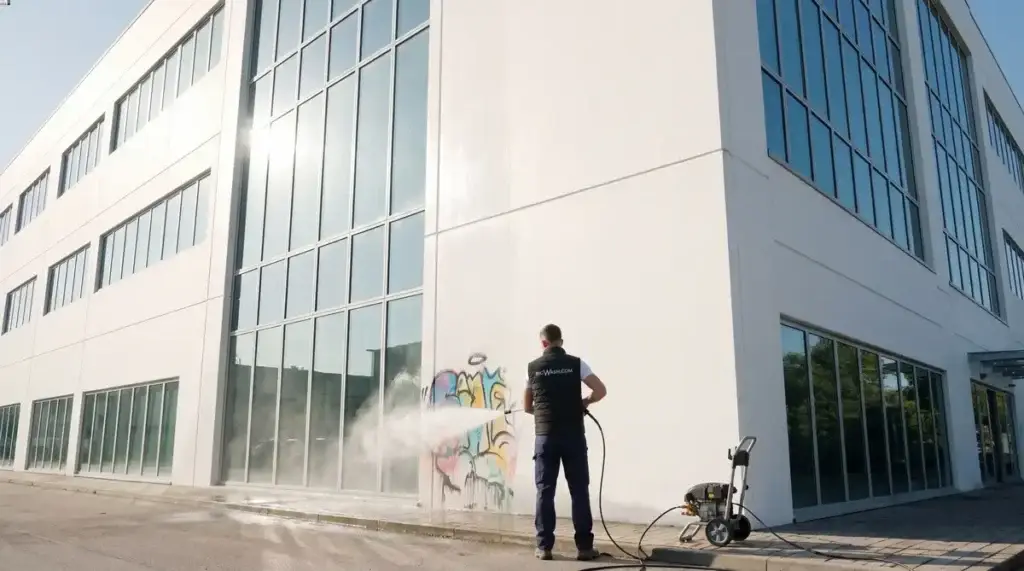
THE SCIENCE BEHIND THE DIRT:
How fast do people judge whether a business is well run?
Before they ever read your sign, just from the outside of the building.
THE DIRTY NUMBERS:
A clean facade can meaningfully boost perceived property value and tenant interest.
YOUR WASH WINDOW:
A commercial building exterior benefits from a soft wash every 6 to 12 months to keep the facade free of algae, mildew, pollen, and pollution film. Buildings in shaded, humid, or high-traffic areas often want every 6 months, since the shaded elevations grow dingy first.
Coastal commercial buildings take on a salt film that dulls the facade and feeds growth, so every 6 to 9 months keeps them sharp, with attention to ocean-facing elevations.
The warm rainy season drives the fastest buildup, so timing a wash around it keeps the building presentable through peak business months. Materials we use include sodium-hypochlorite soft-wash blends matched to the facade material (stucco, EIFS, brick, metal panel, or glass curtain wall), surfactants, and mildewcides. Machinery is a soft-wash system with high-reach capability and low-pressure tips, plus water-fed poles for upper-story glass and panels, never high pressure on the building envelope.
Commercial Kitchen Deep Cleaning
THE SCIENCE BEHIND THE DIRT:
What's the number-one fuel source for commercial kitchen fires?
Grease buildup, and it accumulates in places you never see.
THE DIRTY NUMBERS:
Grease-related fires drive a large share of restaurant fire damage every year.

YOUR WASH WINDOW:
Commercial kitchen exhaust and hood systems should be cleaned on a schedule tied to how much cooking happens: high-volume kitchens (frying, charbroiling) every 1 month, moderate-volume kitchens every 3 months, and low-volume operations every 6 months. This timing follows widely used fire-code guidance, and many insurers and inspectors require documented proof.
Coastal location does not change grease buildup, but humidity and salt can accelerate corrosion on exterior exhaust components, so those benefit from attention during each service.
Volume drives the schedule far more than season, though busy holiday stretches add buildup faster. Materials we use include food-safe heavy-duty degreasers, caustic hood-and-flue cleaners, and sanitizing rinses safe for food-prep areas. Machinery includes hot-water pressure systems for hoods and ducts, foaming applicators, and containment setups that capture runoff so grease never reaches the drains. We provide before-and-after documentation for your compliance records.
Dumpster Pad / Area Cleaning
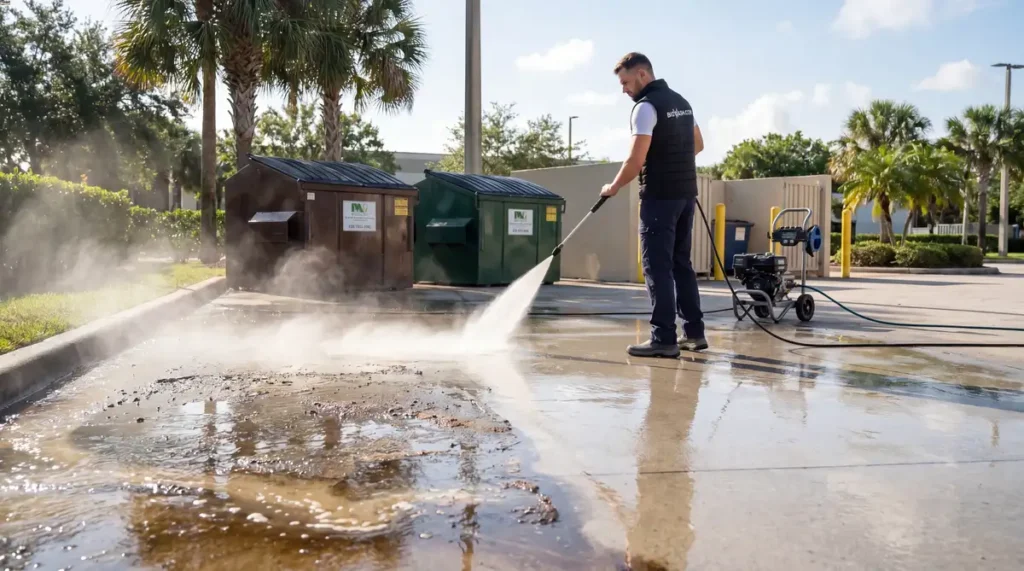
THE SCIENCE BEHIND THE DIRT:
What's one of the most cited spots in a health inspection?
The dumpster pad, a magnet for pests, odor complaints, and violations.
THE DIRTY NUMBERS:
Inspectors flag dirty dumpster areas more often than most owners expect.
YOUR WASH WINDOW:
A dumpster pad benefits from a degreasing and sanitizing clean every 1 to 3 months, since it collects grease, food waste, and bacteria that draw pests and trigger health-code violations. Restaurants and food-service properties often want monthly, while lower-waste sites can run quarterly.
Coastal heat and humidity accelerate odor and bacterial growth, so warm-weather properties near the coast often lean toward monthly year-round.
The warm season is when odor and pest problems peak, so more frequent cleaning then is most valuable. Materials we use include heavy-duty enzymatic degreasers that break down grease and food residue, plus a commercial sanitizer and deodorizer. Machinery is a hot-water pressure system for cutting baked-on grease, paired with a containment and reclaim setup so the dirty water is captured rather than running into storm drains, which is both an environmental and a code requirement.
Fleet Washing
THE SCIENCE BEHIND THE DIRT:
What's the biggest moving advertisement your business owns?
Your fleet, which means a dirty truck advertises the exact opposite of what you want.
THE DIRTY NUMBERS:
Regular washing protects paint and resale value while keeping your brand sharp on the road.
YOUR WASH WINDOW:
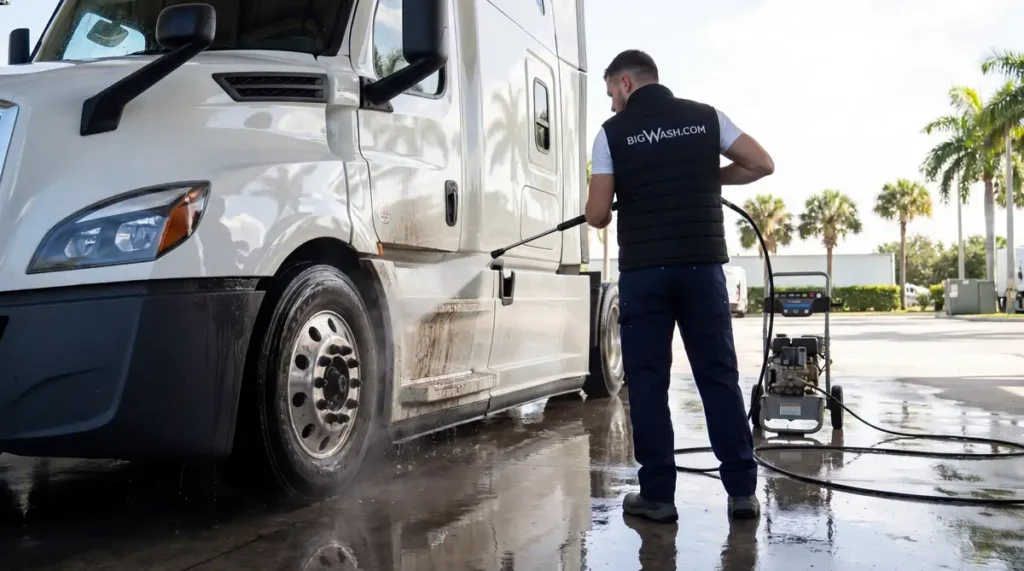
Fleet vehicles do best with a wash every 1 to 2 weeks to keep the brand looking sharp and to protect the paint and finish. Heavily used vehicles or those covered in road grime and brake dust may want weekly, while lighter-use fleets can run every 2 to 4 weeks.
Coastal fleets face salt that corrodes paint, undercarriages, and fittings, so a more frequent wash, often weekly, with attention to the undercarriage, significantly extends vehicle life and protects resale value.
The rainy season and pollen season both coat vehicles faster, so tightening the schedule then keeps the fleet presentable. Materials we use include pH-neutral vehicle soaps that protect clear coat, a salt-neutralizing rinse for coastal fleets, and spot-free deionized water for windows and finish. Machinery includes low-to-medium pressure systems, foam cannons, soft brushes, and water-reclaim mats where required so wash water is captured per environmental rules.
Parking Lot & Garage Cleaning
THE SCIENCE BEHIND THE DIRT:
Where do customers form their first opinion of your business?
In the parking lot, before they ever reach the door.
THE DIRTY NUMBERS:
A clean lot improves safety, drainage, and that all-important first impression.
YOUR WASH WINDOW:
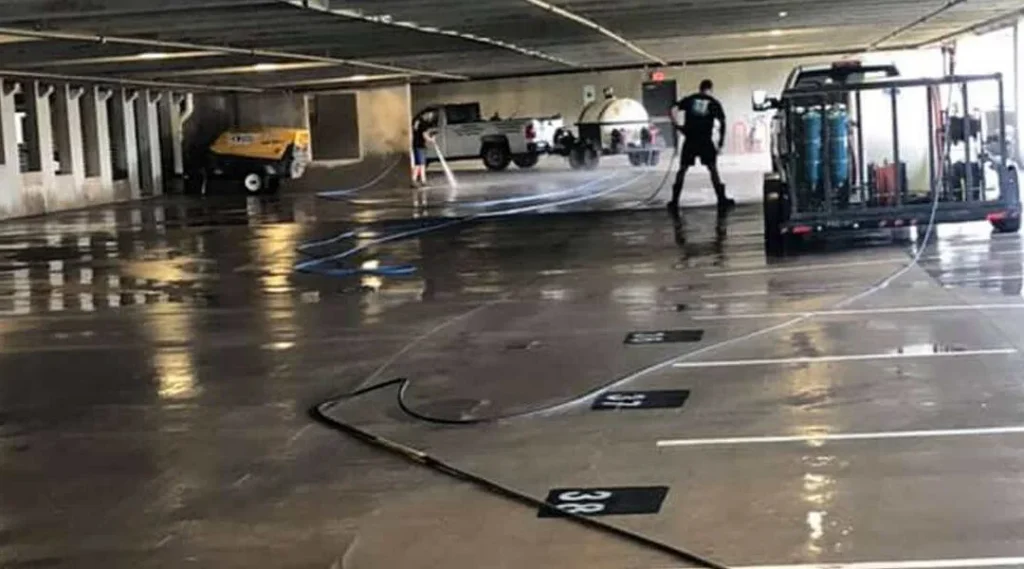
Parking lots and garages benefit from a cleaning every 3 to 6 months to clear oil stains, gum, debris, and the grime that builds with traffic. High-traffic retail and multi-level garages often want every 1 to 3 months, especially at entrances, stairwells, and elevator lobbies.
Coastal lots collect salt and sand that wear the surface and clog drains, so every 3 months keeps them clean and the drainage clear.
The rainy season is when oil sheens, clogged drains, and algae in shaded sections become safety issues, so timing a clean around it matters. Materials we use include heavy-duty degreasers for oil and tire marks, a sodium-hypochlorite blend for organic staining, and gum removers. Machinery includes large flat-surface cleaners and ride-on or walk-behind systems for big areas, plus water-reclaim equipment so runoff is captured rather than entering storm drains.
Post-Construction Cleanup
THE SCIENCE BEHIND THE DIRT:
What do clients actually notice most about a brand-new build?
Not the construction, but the dust, splatter, and debris left behind.
THE DIRTY NUMBERS:
Professional cleanup is what turns finished into move-in ready.
YOUR WASH WINDOW:
Post-construction cleanup is project-based rather than recurring, and it typically happens in phases: a rough clean after the major work, a final detailed clean before occupancy, and a touch-up clean after the punch list is closed. The timing follows your construction schedule, not the calendar.
Coastal job sites accumulate salt and fine sand alongside construction dust, so the final clean often needs extra attention to window tracks, frames, and exterior surfaces near the water.
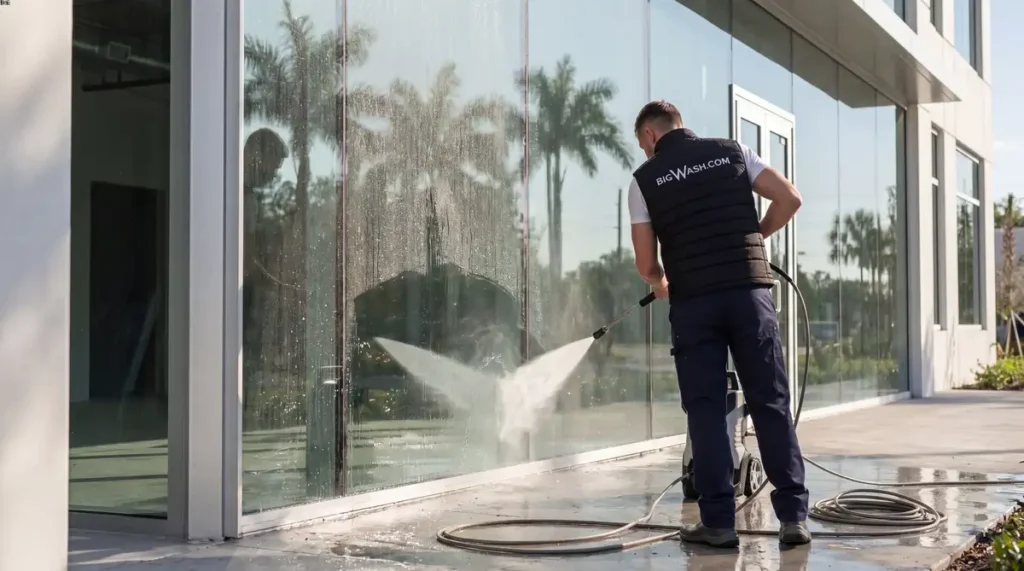
Season matters less than the build timeline, though outdoor exterior cleaning is best scheduled around dry days. Materials we use include construction-grade degreasers, adhesive and paint-splatter removers, glass cleaners for haze and stickers, and dust-capturing solutions. Machinery includes pressure and soft-wash systems for exterior surfaces, surface cleaners for new concrete and pavers, and detailed hand tools for windows, frames, and fixtures, delivering the finished, move-in-ready result.
Stadium Cleaning
THE SCIENCE BEHIND THE DIRT:
How much mess does a single event really leave behind?
Thousands of seats coated in spills and stickiness, all needing cleaning before the next crowd.
THE DIRTY NUMBERS:
Large venues need fast, large-scale cleaning to flip between events on tight schedules.
YOUR WASH WINDOW:
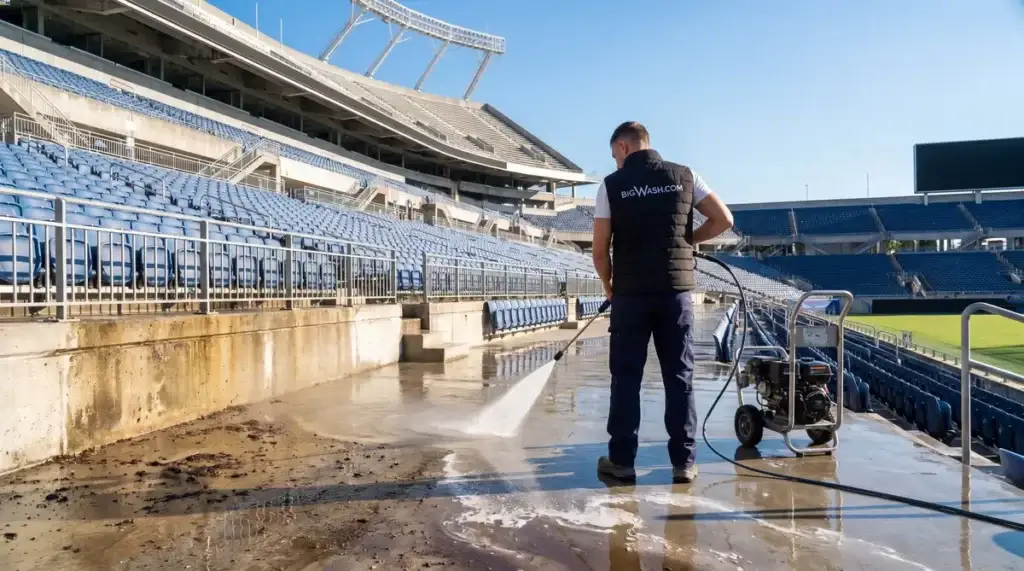
Stadium and large-venue cleaning is event-driven: seating bowls, concourses, and restrooms are cleaned after every event, while a deeper full-venue wash-down is scheduled between event series or seasons. The cadence follows your event calendar more than a fixed interval.
Coastal venues add salt exposure to the constant heavy use, so structural surfaces, railings, and metal components benefit from extra attention during deep cleans to fight corrosion.
Peak event season demands the fastest turnarounds, often overnight between events, while the off-season is the window for deep restorative cleaning. Materials we use include commercial degreasers, sodium-hypochlorite blends for concourse and seating organic staining, and sanitizers for high-touch and restroom areas. Machinery includes large-scale surface cleaners, ride-on systems for concourses, soft-wash setups for seating and structure, and the crew scale to flip a venue on a tight schedule, which is exactly the kind of big job BigWash is built for.
Storefront Cleaning
THE SCIENCE BEHIND THE DIRT:
How do shoppers judge how clean a store is inside?
Entirely by how the outside looks, every single time.
THE DIRTY NUMBERS:
A clean storefront can directly influence foot traffic and walk-in sales.
YOUR WASH WINDOW:
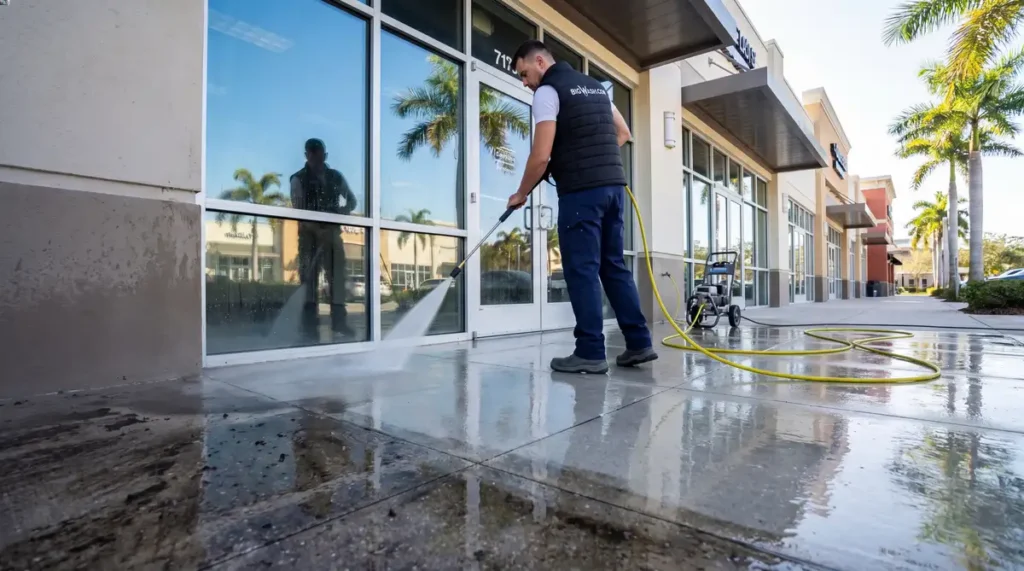
A storefront benefits from a cleaning every 1 to 3 months to keep the entrance, windows, walkways, and signage sharp and inviting. High-traffic retail and food-service storefronts often want monthly, since the entry and glass show grime fastest.
Coastal storefronts collect salt film on glass and metal that dulls the look and can etch the glass, so every 1 to 2 months keeps the storefront bright and protects the windows.
Foot traffic and grime stay fairly steady year-round, though pollen season and the rainy season both dirty glass and walkways faster. Materials we use include streak-free glass solutions, purified water for a spot-free finish, a degreaser for entry walkways, and a gentle cleaner for signage and awnings. Machinery includes water-fed poles for high glass and signage, professional squeegees, a flat-surface cleaner for the entry walkway, and a soft-wash rinse for awnings and facade, scheduled around opening hours.